
A Winter Storm Can Leave More Than Snow Outside
In January 2026, a major winter storm swept across large parts of the United States, bringing heavy snow, ice, and dangerous cold.
According to NOAA, the storm affected more than 20 states from New Mexico to Maine. By January 26, snow covered more than half of the contiguous United States, and some locations received more than a foot of snow.
For homeowners in regions with snowy winters, the inconvenience does not end when the storm passes—or even when you get home and park your vehicle.
The snow can come home with the car
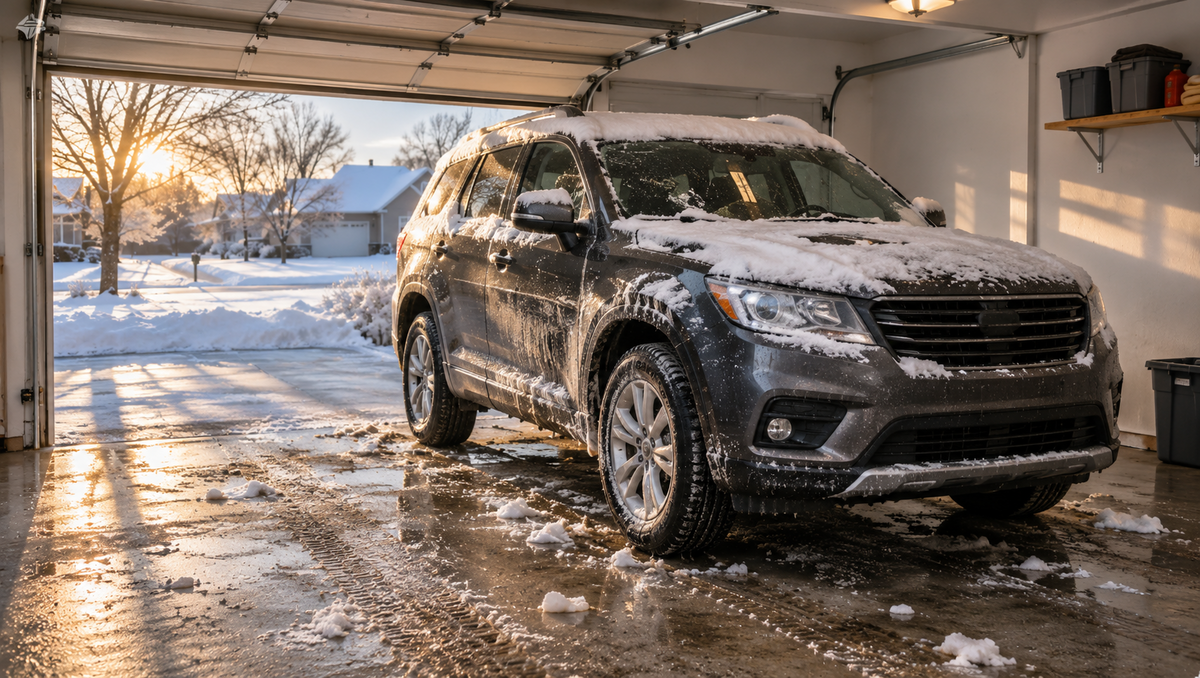
Snow, slush, road salt, mud, and moisture can collect on tires, wheel wells, and the underside of a vehicle. Once the vehicle enters the garage, that material begins to melt and accumulate on the floor.
What starts as snow on the road can quickly become puddles, muddy residue, and salt deposits inside the garage.
And this is where winter weather becomes a household maintenance problem.

![]() What Snowy Weather Brings Into Your Garage
A parked vehicle can carry more than snow into the garage. Its tires, wheel wells, undercarriage, and exterior surfaces collect a mixture of moisture and road debris during everyday driving.
Snow and Meltwater
Snow packed into tire treads and accumulated around wheel wells begins to melt once the vehicle enters a warmer garage.
Water can drip from the tires, undercarriage, and body of the vehicle, gradually spreading around the parking area.
During periods of repeated snowfall, this process happens every time a vehicle comes home. Even after the driveway has been cleared, melted snow can continue to collect beneath a parked vehicle.
Road Salt and Slush
In many parts of the United States, road salt and other deicing materials are used to improve winter driving conditions.
These materials mix with snow and water on the road, creating slush that can cling to tires and vehicle undercarriages.
When the vehicle enters the garage, the mixture comes with it.
As the water disappears, salt and other residue can remain on the floor, leaving white or chalky-looking deposits.
Mud, Dirt, and Road Debris
Winter roads can also carry dirt, sand, gravel, and other debris.
These materials can become trapped in tire treads and around the vehicle. Once inside the garage, they mix with melting snow and water, leaving muddy marks and scattered debris across the parking area.
And winter is not the only time this happens.
Rainy weather and wet roads can bring similar dirt and moisture into the garage throughout the year.

How a Wet, Messy Garage Affects Everyday Life
A wet garage floor may seem like a minor inconvenience at first, but the mess can quickly become part of everyday household life.
Water and Dirt Can Spread Into Your Home
The garage is often one of the main entry points to a home.
When the parking area is covered with melted snow, mud, and road residue, walking from the car to the house can transfer that mess indoors.
Wet shoes can leave footprints across the garage floor and entryway. Dirt and salt residue can also collect near the door, making floors and mats inside the home harder to keep clean.
Instead of keeping outdoor mess outside, homeowners may find themselves cleaning both the garage and the areas immediately inside the house.
Standing Water Can Create Slipping Hazards
Melted snow and rainwater can leave wet areas around parked vehicles, walkways, and garage entrances.
In an unheated garage, water left on the floor may freeze when temperatures drop below freezing.
A thin layer of ice can be difficult to notice, particularly around vehicles or in areas people regularly walk through.
This can make an already messy garage more difficult to navigate during winter.
The risk of slipping on wet floors is not just a theoretical concern.
Wet garage floors can create more than just a cleaning inconvenience. They may also increase the risk of slipping, particularly when melted snow and standing water accumulate in frequently used areas.
According to the U.S. Consumer Product Safety Commission (CPSC), an estimated 3.08 million emergency department-treated injuries in 2025 involved floors or flooring materials in the United States. This figure comes from the CPSC's National Electronic Injury Surveillance System (NEISS) and covers a broad range of floor-related injury incidents.
While the data are not specific to garages or winter weather, they highlight the importance of paying attention to floor conditions and managing water accumulation in everyday living spaces.
Source: U.S. Consumer Product Safety Commission – National Electronic Injury Surveillance System (NEISS)

Garage Floors Become Harder to Keep Clean
As snowmelt, road salt, mud, and everyday dirt accumulate, the garage floor can quickly lose its clean appearance.
White residue, tire marks, muddy footprints, and water stains may appear in different areas of the parking space.
Even after cleaning, another trip through wet or snowy conditions can bring the same mess back.
For homeowners who use their garages every day, keeping the floor clean can become a recurring chore rather than an occasional task.
Why Cleaning Your Garage Becomes Harder in Winter
Cleaning a garage is relatively straightforward in mild weather.
In winter, however, low temperatures can make even basic cleaning tasks less convenient.
Washing the Floor May Not Be Practical
Rinsing a garage floor with water can help remove mud, road salt, and accumulated dirt.
But when temperatures are below freezing, leftover water may freeze before the floor has a chance to dry.
That can create new icy patches and make the garage floor more difficult to walk across.
For homeowners with unheated garages, using large amounts of water for routine cleaning may simply not be practical during particularly cold periods.
Dry Cleaning Takes Repeated Effort
Avoiding water does not necessarily make winter cleaning easy.
Sweeping away dried dirt, brushing out road salt residue, and wiping muddy marks can require repeated effort.
When snow continues to melt beneath a parked vehicle, the floor may become dirty again before the previous cleanup is finished.
And doing this work in a cold garage is not exactly an appealing winter chore.

Why Garage Floor Protection Makes Sense
Cleaning up after snow and mud have spread across the garage is not always the most convenient approach.
Instead of repeatedly dealing with water and debris across the entire parking area, homeowners can consider managing these materials closer to where they collect.
A dedicated garage floor protection solution can help:
-
Contain snowmelt: Keep melted snow and water within a designated parking area rather than allowing them to spread across the surrounding floor.
-
Manage road salt and dirt: Collect common vehicle-related residue in one place, making routine cleanup more manageable.
-
Reduce the spread of moisture: Help limit the movement of water and debris toward garage entrances and walkways.
-
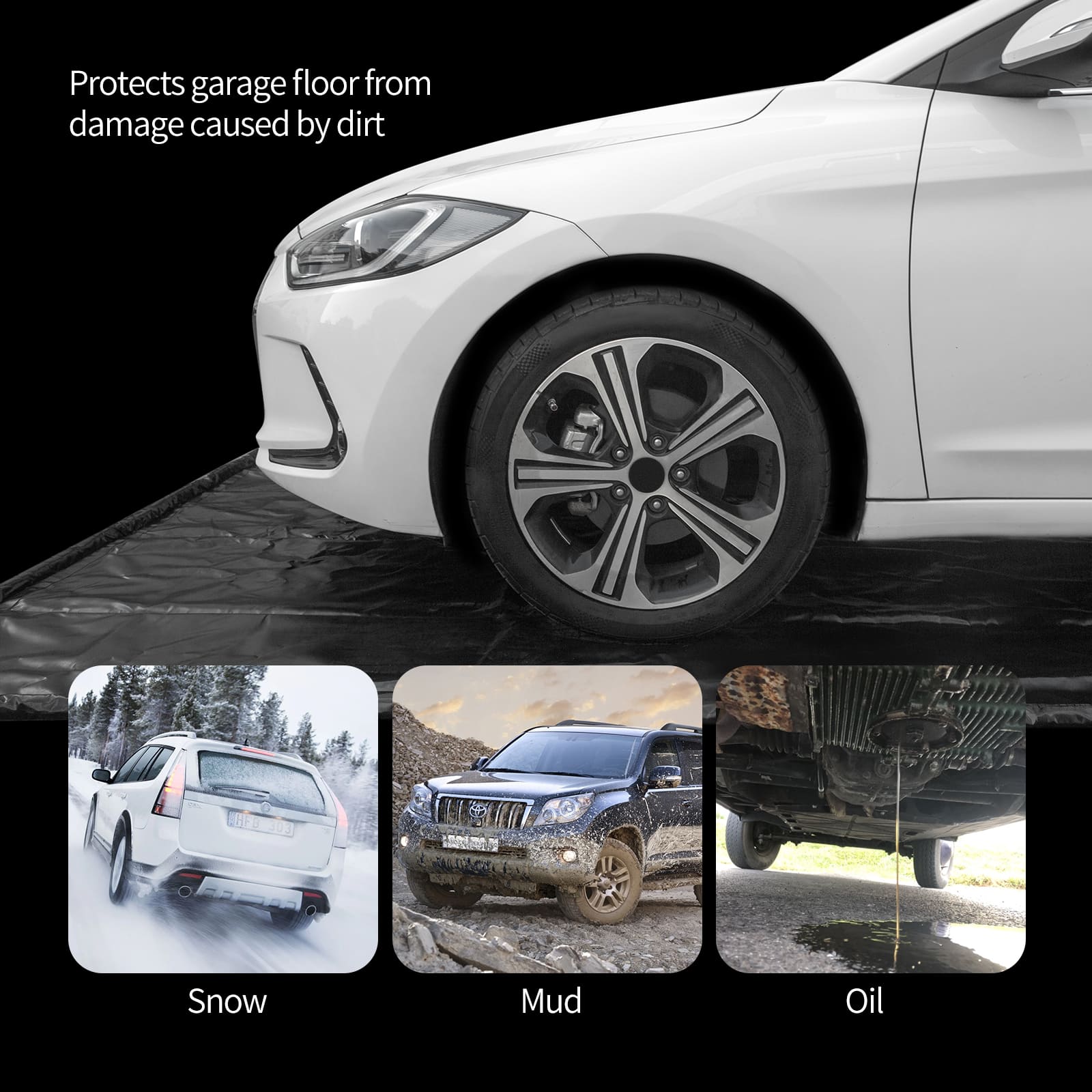
Simplify seasonal maintenance: Provide a designated surface that can be cleaned without repeatedly washing the entire concrete garage floor.
The goal is not to eliminate cleaning altogether. It is to make the mess easier to manage.
A Practical Way to Manage Snowmelt in Your Garage
For homeowners who regularly park vehicles in snowy or rainy conditions, a garage floor containment mat is one practical way to manage water and debris.
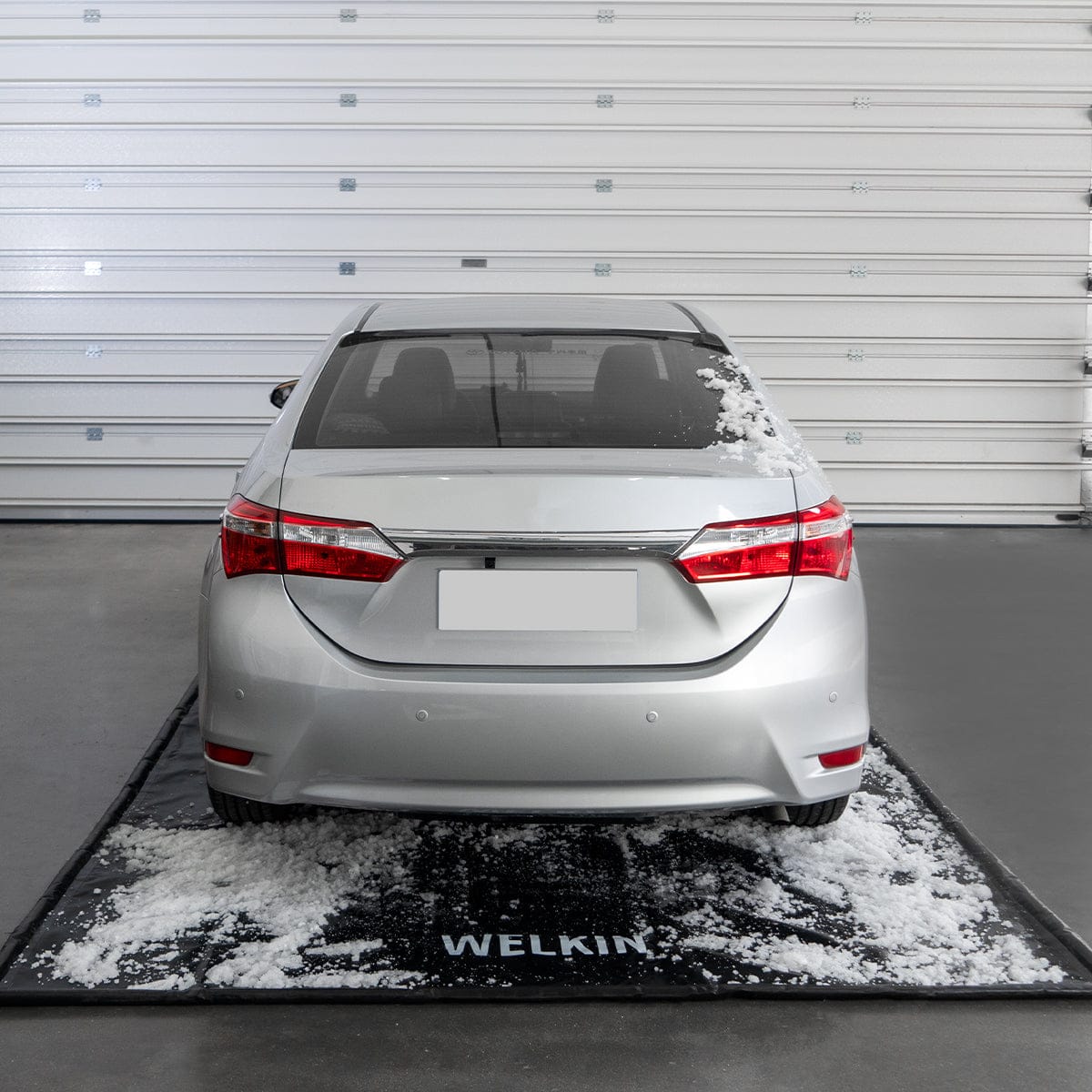
The WELKIN Garage Floor Containment Mat is designed to create a protected parking area beneath your vehicle.
Unlike a standard flat garage mat, its raised-edge design helps contain melted snow, rainwater, mud, and other vehicle-related debris within the parking area.
Explore the WELKIN PVC Garage Floor Containment Mat

Keep Winter Mess Under Control
Winter weather can make everyday garage maintenance more difficult.
Snow, slush, road salt, and mud follow vehicles home, leaving wet floors, dirty surfaces, and additional cleanup around the house.
When temperatures drop, cleaning becomes less convenient, and standing water may freeze.
A little preparation can make winter garage maintenance easier.
By managing snowmelt and vehicle-related debris within a designated parking area, homeowners can spend less time dealing with mess across the entire garage.
Whether you are preparing for the next snowstorm or simply trying to keep your garage cleaner year-round, protecting the area beneath your vehicle is a practical place to start.






Leave a comment
All comments are moderated before being published.
This site is protected by hCaptcha and the hCaptcha Privacy Policy and Terms of Service apply.